Your pool might look okay, but water can turn unsafe without you realizing it. Here are 7 warning signs that something’s not right — and it might be time to take action.
1. You keep adding more chlorine — but it “doesn’t work”
If you find yourself increasing chlorine dose week after week, that’s not bad luck.
It usually means:
High CYA (stabilizer overload)
Chlorine lock
Poor oxidation
Organic load building up
More chlorine is not a strategy. It’s a reaction.
If the dose keeps going up, something in the balance is already off.
If you find yourself increasing chlorine dose week after week, that’s not bad luck.
It usually means:
High CYA (stabilizer overload)
Chlorine lock
Poor oxidation
Organic load building up
More chlorine is not a strategy. It’s a reaction.
If the dose keeps going up, something in the balance is already off.
2. The water is clear… but feels “heavy”
Clients describe it as:
“Thick”
“Flat”
“Not fresh”
Clear water doesn’t mean healthy water.
Disinfection efficiency is chemistry, not appearance.
Clients describe it as:
“Thick”
“Flat”
“Not fresh”
Clear water doesn’t mean healthy water.
Disinfection efficiency is chemistry, not appearance.
3. Strong chlorine smell
A clean pool should not smell like a public locker room.
Strong smell = combined chlorine (chloramines).
That’s used chlorine reacting with contaminants.
That’s not “strong disinfection”. That’s chemistry struggling.
A clean pool should not smell like a public locker room.
Strong smell = combined chlorine (chloramines).
That’s used chlorine reacting with contaminants.
That’s not “strong disinfection”. That’s chemistry struggling.
4. You need more chemicals than before
If:
pH drifts faster
Alkalinity is unstable
Chlorine disappears quickly
Your water balance is deteriorating.
The pool starts consuming chemicals instead of staying stable.
If:
pH drifts faster
Alkalinity is unstable
Chlorine disappears quickly
Your water balance is deteriorating.
The pool starts consuming chemicals instead of staying stable.
5. Scaling or rough surfaces appear slowly
Even before visible scale, you may notice:
Dull tiles
Slight roughness
Deposits around fittings
Water balance always shows up on surfaces first.
Even before visible scale, you may notice:
Dull tiles
Slight roughness
Deposits around fittings
Water balance always shows up on surfaces first.
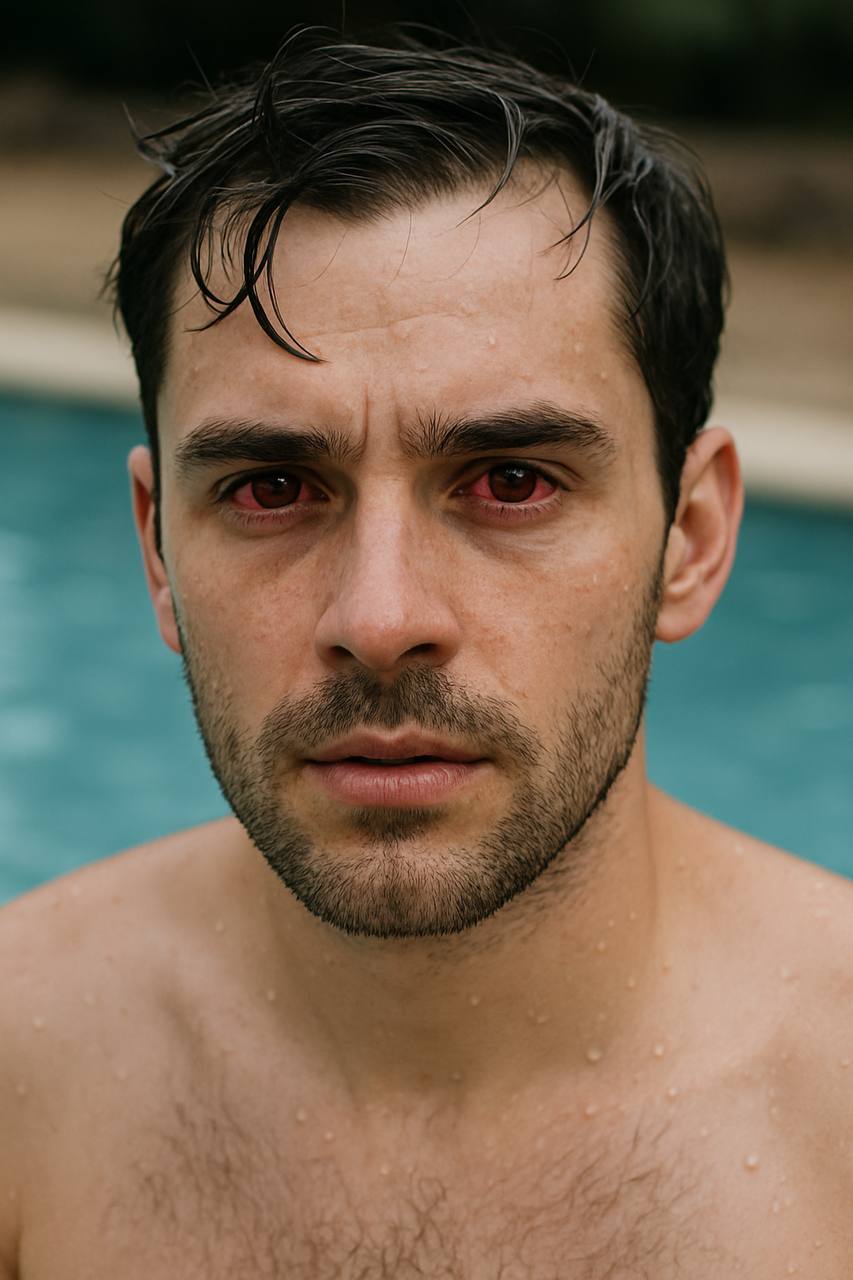
6. Swimmers complain more often
Burning eyes. Dry skin. Itching.
That’s not “sensitive skin”.
That’s usually poor water chemistry or low active disinfectant (HOCl).
Burning eyes. Dry skin. Itching.
That’s not “sensitive skin”.
That’s usually poor water chemistry or low active disinfectant (HOCl).
7. You test numbers — but don’t test efficiency or check overall balance
Many pools “have chlorine.”
But how much of it is actually active (HOCl)?
And beyond sanitation — is the water chemically balanced?
Water health is not just about chlorine level. It depends on:
Active disinfectant efficiency (HOCl vs. CYA relationship)
Oxidation capacity
Organic load
Stabilizer concentration
LSI balance (scale-forming vs. corrosive tendency)
A pool can pass basic strip tests and still be:
Under-sanitized
Scaling
Corrosive to equipment
Chemically unstable
Numbers alone don’t guarantee protection.
Only system balance does.
Many pools “have chlorine.”
But how much of it is actually active (HOCl)?
And beyond sanitation — is the water chemically balanced?
Water health is not just about chlorine level. It depends on:
Active disinfectant efficiency (HOCl vs. CYA relationship)
Oxidation capacity
Organic load
Stabilizer concentration
LSI balance (scale-forming vs. corrosive tendency)
A pool can pass basic strip tests and still be:
Under-sanitized
Scaling
Corrosive to equipment
Chemically unstable
Numbers alone don’t guarantee protection.
Only system balance does.