
Aggressive water case study: from chemical imbalance to a sustainable treatment strategy
How water analysis, corrective action and a change in disinfection technology addressed deteriorating water chemistry and the risk of further pool surface damage.
5 November 2026
A swimming pool can look clean while its water chemistry is creating conditions that affect disinfection, water balance and the materials surrounding the pool.
This case study follows a swimming pool in Paphos, Cyprus, first analysed by PoolHealth in July 2025. Six months later, the chemical imbalance had become significantly more severe, disinfection was increasingly challenging, and visible deterioration of the pool surfaces had emerged.
The solution required more than adjusting individual readings. The pool was completely drained, its surfaces were cleaned while it was empty, and it was refilled; the filtration system was treated, the water chemistry was re-established, and the ongoing treatment strategy was changed. By October 2026, the latest measurements recorded in the PoolHealth app showed a substantially different chemical profile.
In short
- A pool in Paphos, Cyprus, analysed in July 2025 already showed a chemical imbalance. By January 2026, cyanuric acid (CYA) had reached 180 ppm from trichlor, total alkalinity had fallen to 35 ppm and sulphate stood at 560 ppm after sodium bisulphate use, with grout deterioration and rust on the ladder.
- The intervention: complete drain, mechanical cleaning of the empty pool, refill with fresh water, enzyme treatment of the filtration system, rebalancing, sodium bisulphate replaced by hydrochloric acid, and trichlor replaced by saltwater chlorination with CYA managed deliberately.
- Result on 13 October 2026: CYA 24 ppm, total alkalinity 98 ppm, calcium hardness 326 ppm, pH 7.73, free chlorine 2.24 ppm, LSI −0.04.
- Existing grout damage and ladder corrosion are not reversed by water chemistry or maintenance. Water management helps avoid them when it is in place from the start.
1. The first analysis: July 2025
When PoolHealth first analysed the pool water in July 2025, the results already indicated a significant chemical imbalance.
| Parameter | Measured value |
|---|---|
| Calcium hardness (CH) | 161 ppm |
| Sulphate (SO₄²⁻) | Overrange |
| Cyanuric acid (CYA) | 73 ppm |
| Total alkalinity (TA) | 192 ppm |
| pH | 7.64 |
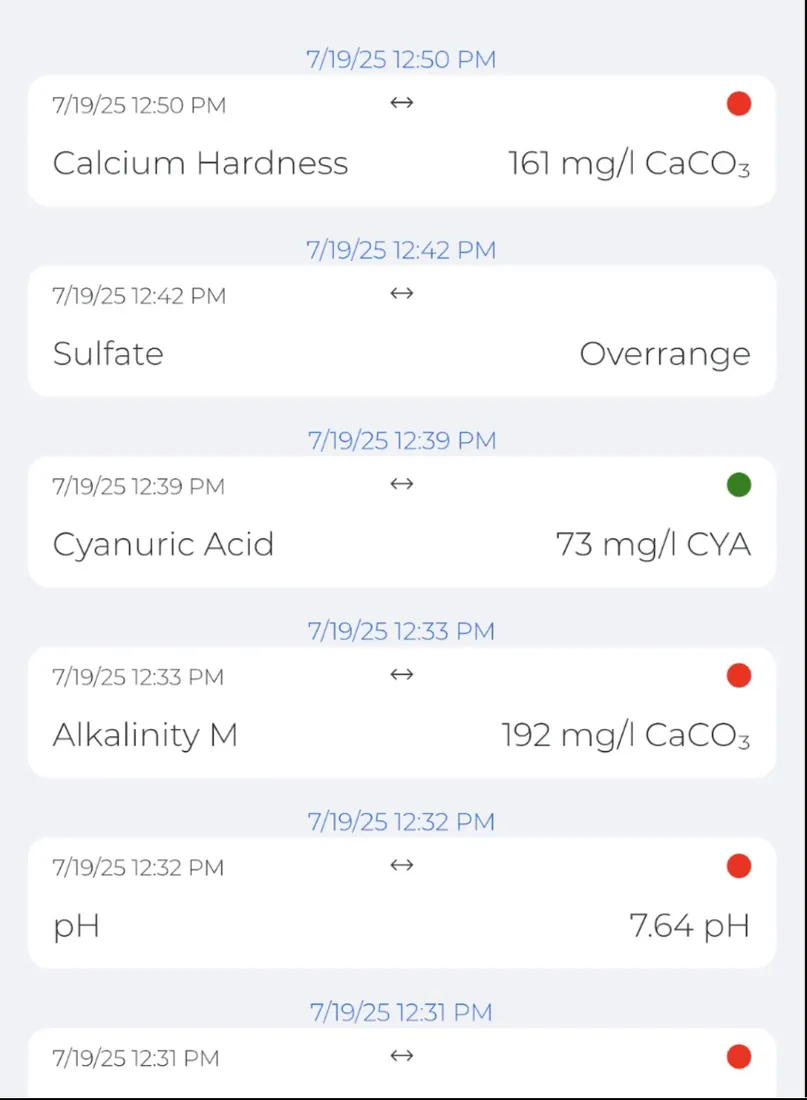
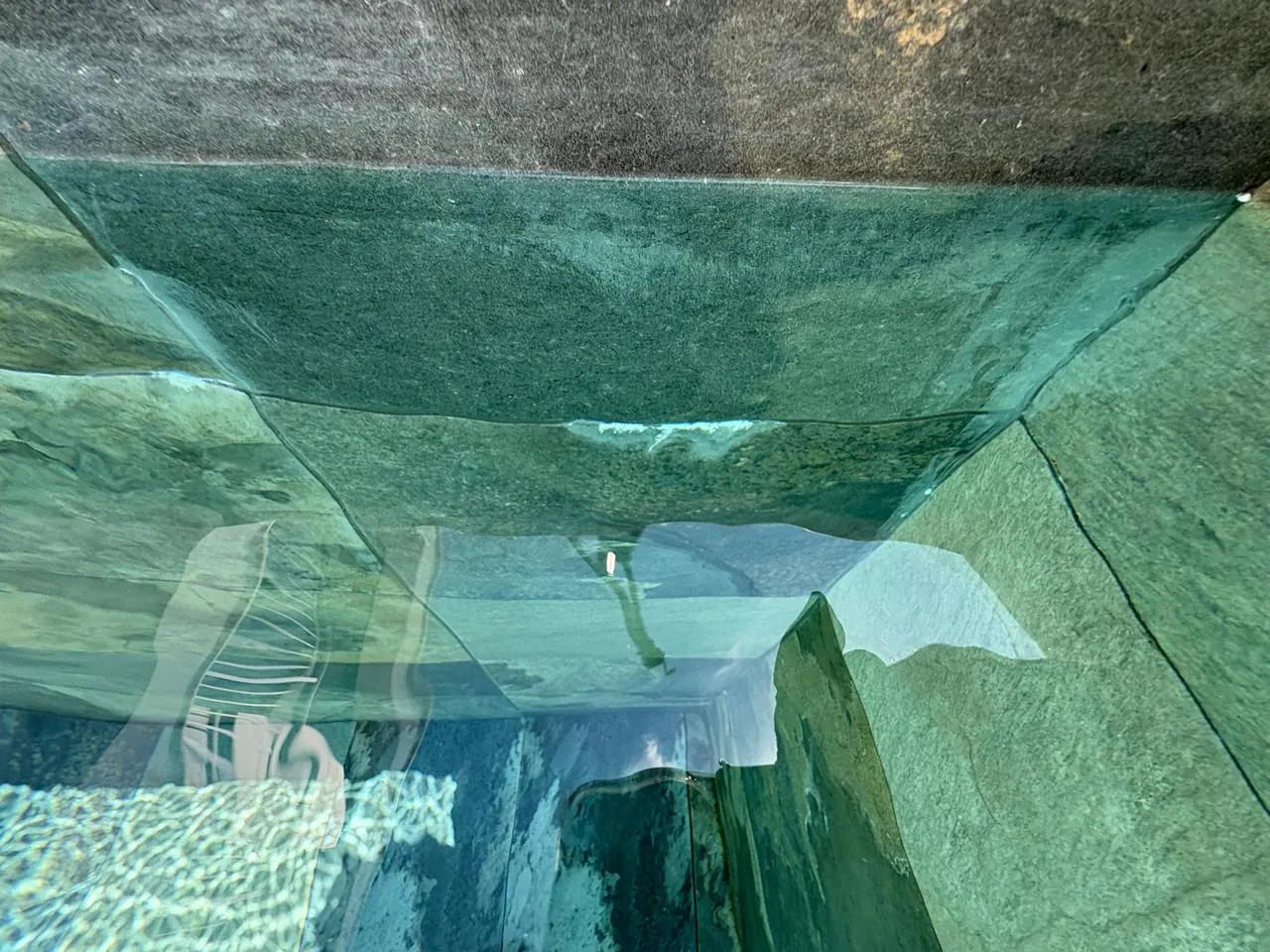
The combination of low calcium hardness, elevated total alkalinity and an already elevated cyanuric acid concentration warranted closer investigation.
The sulphate reading exceeded the instrument’s measurement range, so the exact concentration could not be determined from this test.
The overall chemistry raised concerns about potentially aggressive water conditions and their effects on susceptible calcium-containing materials.
At this stage, the measurements provided a snapshot of the pool’s condition. The subsequent analysis revealed that the imbalance had become considerably more severe.
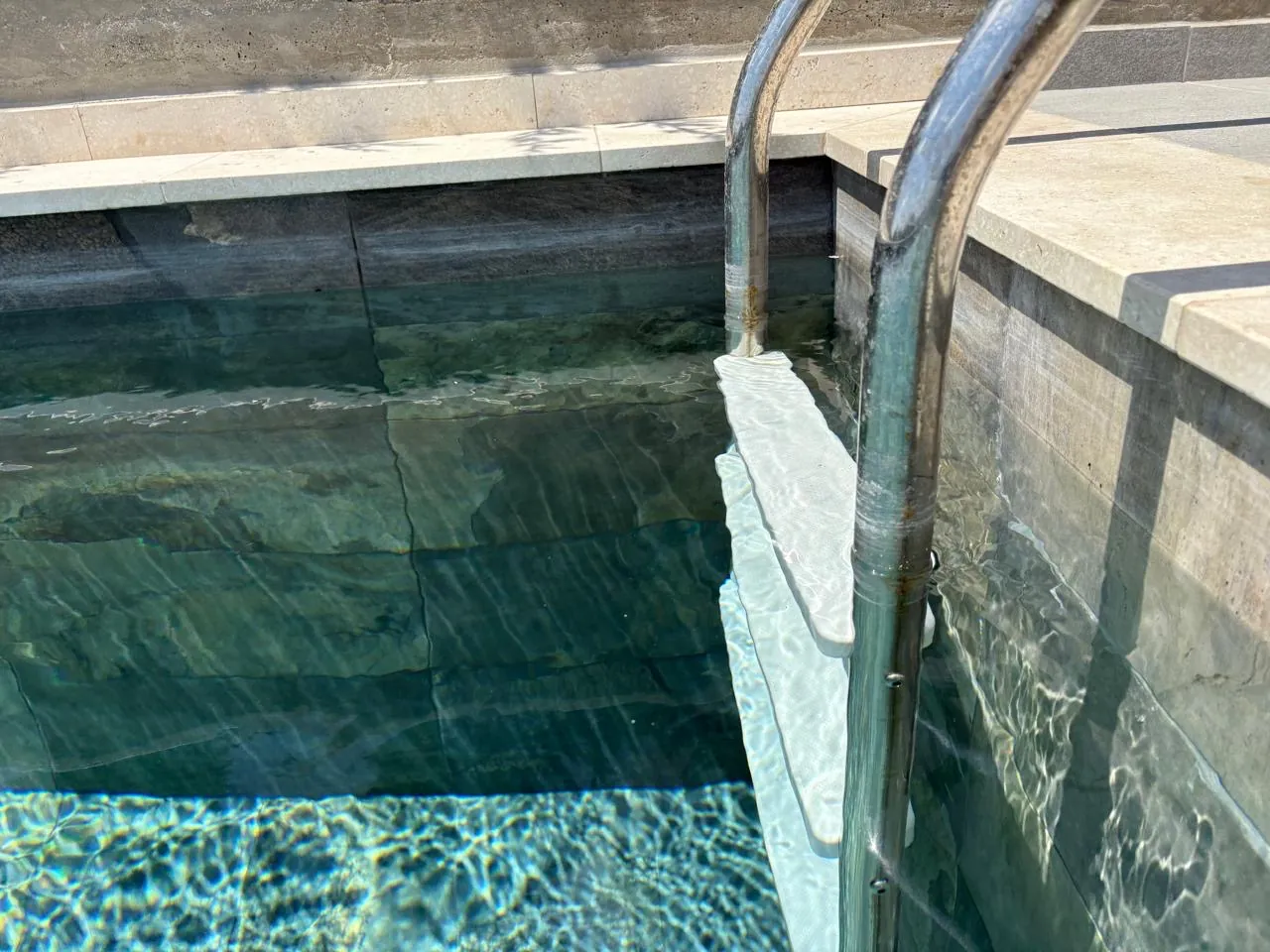
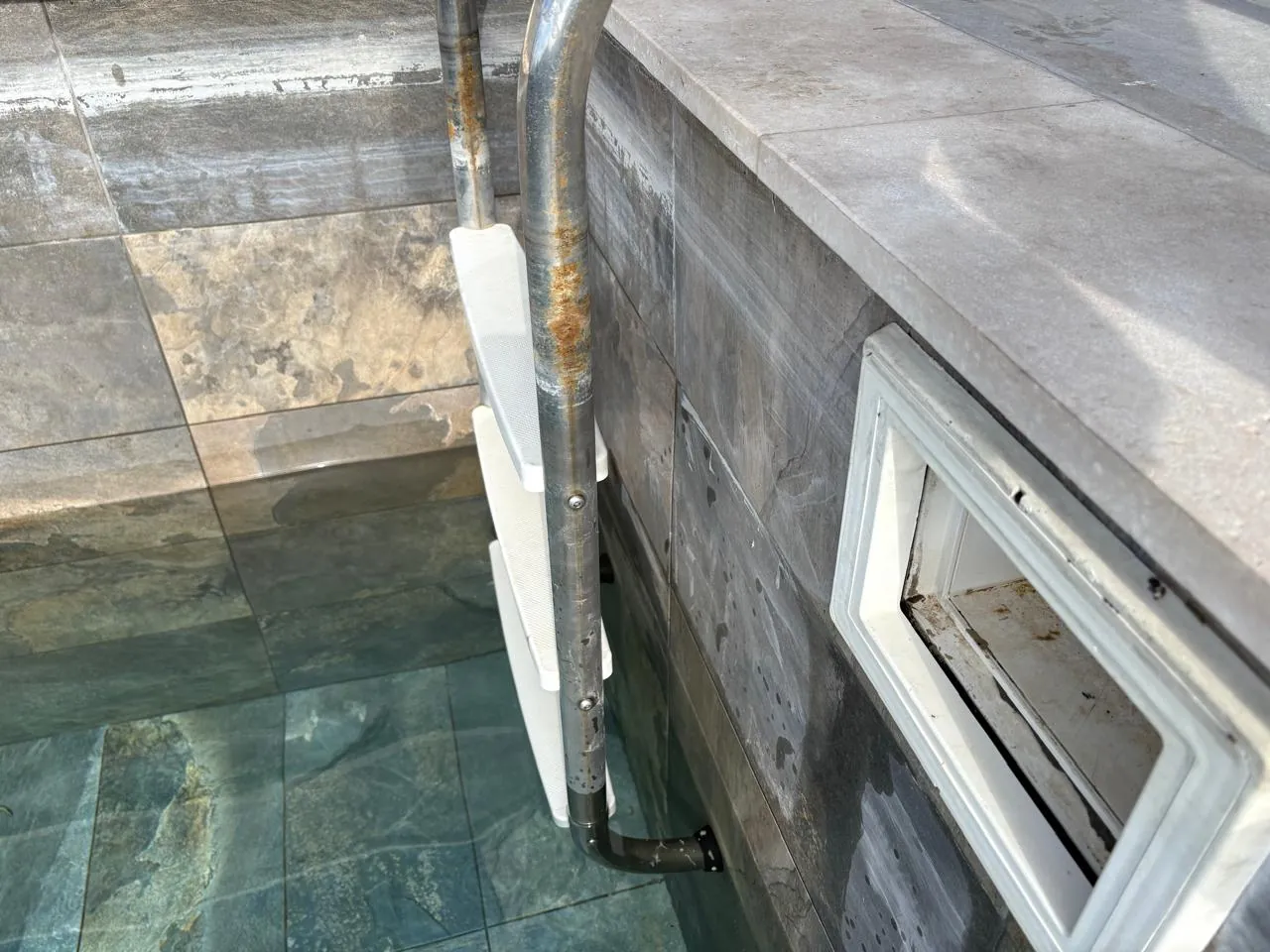
By August 2025, the pool ladder was already showing rust staining.
2. Six months later: the problem becomes visible
When PoolHealth was contacted again approximately six months later, the results showed substantial changes.
| Parameter | Measured value |
|---|---|
| Calcium hardness (CH) | 163 ppm |
| Sulphate (SO₄²⁻) | 560 ppm |
| Free chlorine (FC) | 5.23 ppm |
| pH | 7.30 |
| Total alkalinity (TA) | 35 ppm |
| Cyanuric acid (CYA) | 180 ppm |
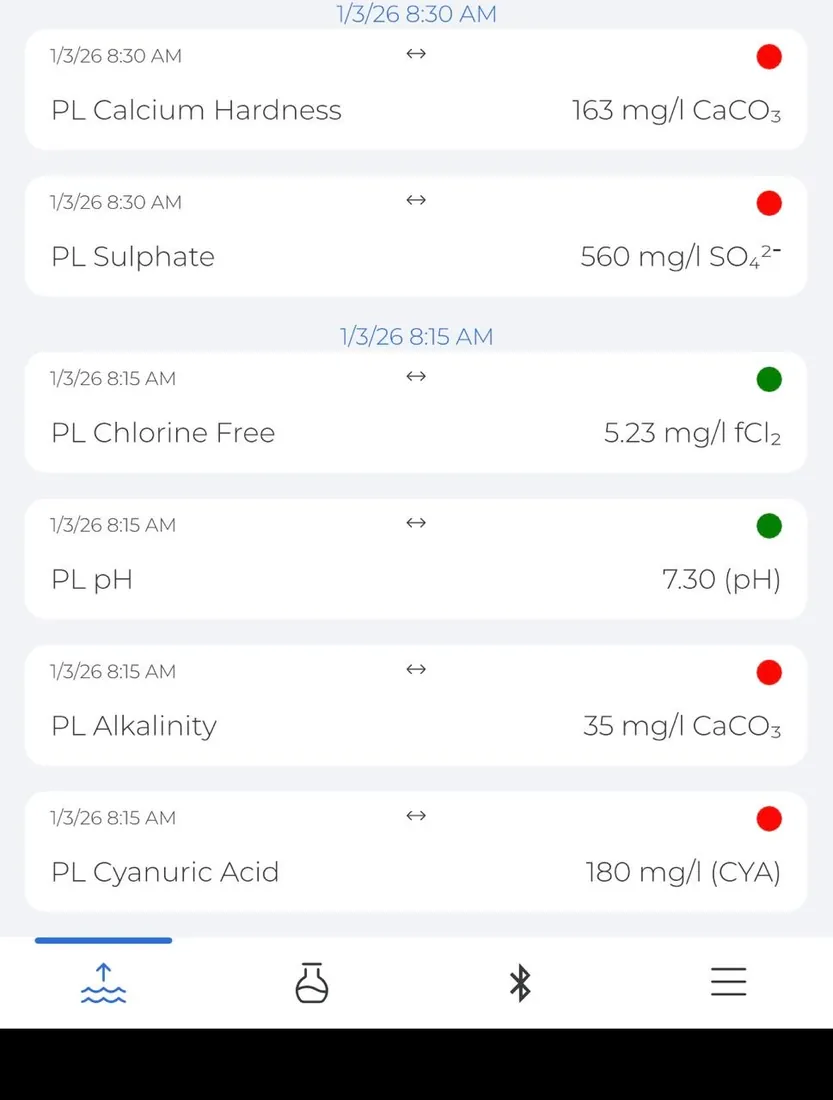
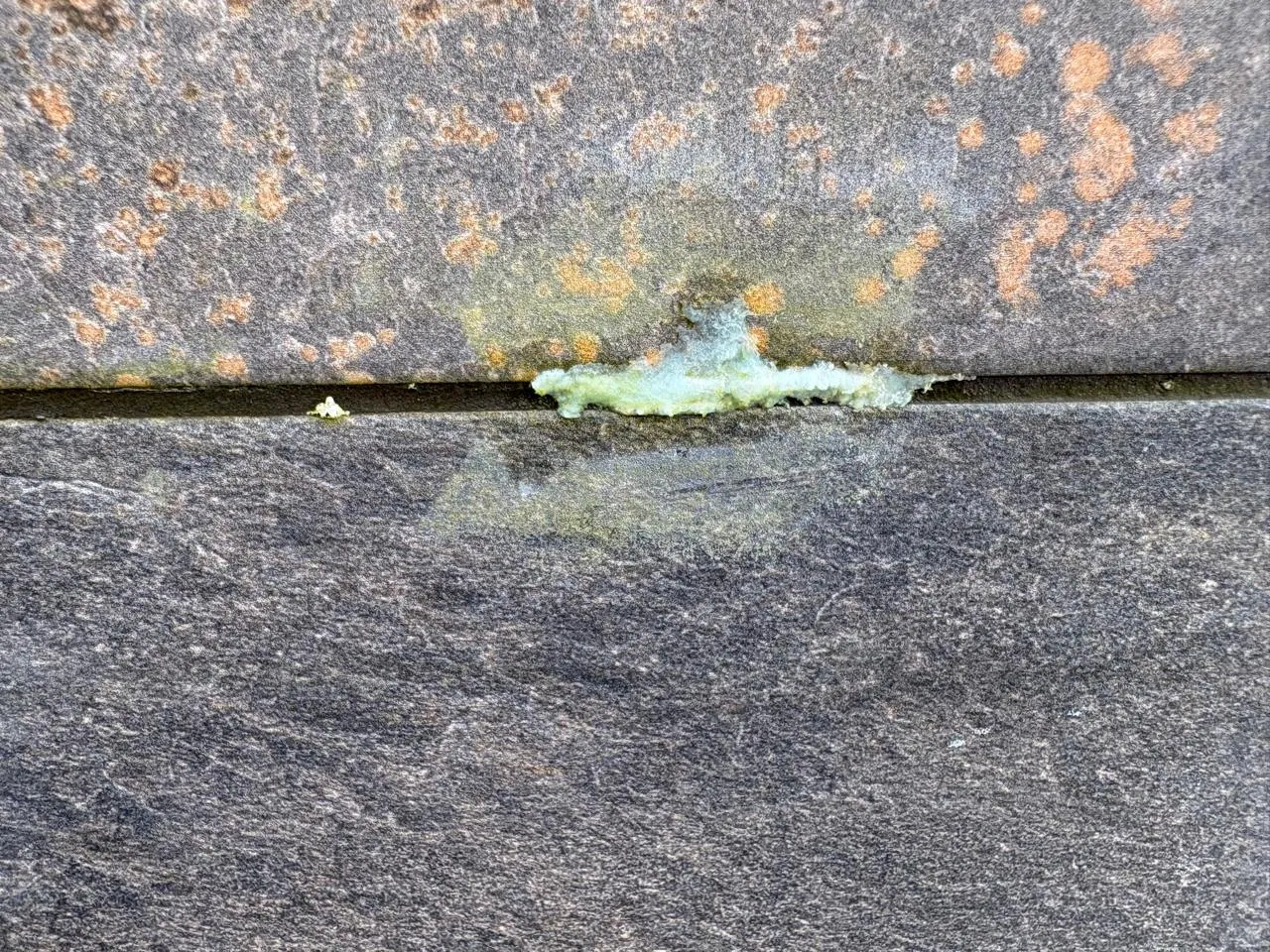
Cyanuric acid had reached 180 ppm. The pool was using trichlor for disinfection. Trichlor adds cyanuric acid as it dissolves, so continued use can cause CYA to accumulate. At high concentrations, the relationship between free chlorine and cyanuric acid becomes especially important when evaluating disinfection.
A free chlorine reading of 5.23 ppm could not, by itself, demonstrate that disinfection was adequate for the pool’s operating conditions. We explain why in why chlorine “stops working” in Cyprus pools.
Total alkalinity had fallen to 35 ppm. This indicated very limited buffering capacity, making pH stability more difficult to maintain.
Calcium hardness remained low at 163 ppm. Together with the other parameters, this raised concerns about the water’s interaction with susceptible pool materials.
Meanwhile, visible deterioration had emerged. The issue was no longer limited to chemical readings: the pool surfaces were showing signs of damage, and the ladder had developed rust staining.
3. Understanding the chemistry behind the damage
The treatment routine was an important part of the overall picture.
Sodium bisulphate (dry acid) was being used to lower pH, while trichlor was used for disinfection. Both contribute acidity to pool water, although their chemical effects differ.
Trichlor also introduces cyanuric acid. As CYA accumulates, the proportion of chlorine present in its more active forms decreases. This makes effective disinfection more challenging to manage and increases the importance of monitoring both free chlorine and cyanuric acid.
Repeated acidic chemical additions can consume total alkalinity. In this case, TA eventually fell to 35 ppm, leaving the water with very limited buffering capacity.
Sodium bisulphate introduced another consideration: it adds sulphate ions to the water. Continued use can contribute to sulphate accumulation. This is the same mechanism behind the calcium sulphate scale we see in other pools.
The combination of low calcium hardness, depleted alkalinity and the effects of acidic treatment raised concerns about the water’s tendency to dissolve calcium-containing materials. Calcium can be leached from susceptible cement-based grout, contributing to deterioration.
Rust on the pool ladder was another warning sign. Corrosion can be influenced by water chemistry, chloride exposure, metal grade, surface condition and other factors. Rust alone does not establish a single cause, but it warranted attention alongside the other signs of deterioration.
The key lesson is that pool water cannot be assessed by looking at pH or free chlorine in isolation. The interaction between parameters, the chemicals used and their cumulative effects must all be considered. That is the logic behind our PoolHealth approach.
4. The PoolHealth intervention
By this stage, adjusting individual readings was no longer sufficient. The priority was to remove the accumulated chemical burden, establish a fresh baseline and improve the long-term treatment strategy.
Step 1: Draining the pool
The pool was completely drained. This removed the water that carried the cyanuric acid and sulphates accumulated over the previous period, and gave access to the surfaces for cleaning.
Step 2: Mechanical cleaning
With the pool empty, accessible pool surfaces were cleaned mechanically to remove as much existing contamination and residue as possible.
Step 3: Refilling with fresh water
The pool was then refilled with fresh water, providing a new starting point for water chemistry management. The fresh fill water contained neither cyanuric acid nor the accumulated sulphates identified in the previous analyses.
Because this is an outdoor pool, cyanuric acid was subsequently added in a controlled amount. CYA helps protect chlorine from degradation by ultraviolet radiation. The objective was to establish an appropriate stabiliser concentration rather than allow it to accumulate continuously through the use of trichlor. Sulphates, by contrast, were not added as part of the new treatment strategy.
Step 4: Enzyme treatment of the filtration system
The filtration system underwent enzyme treatment as part of the cleaning process, targeting organic contamination.
Step 5: Analysis and balancing of the fresh water
After refilling, the water was tested to establish its actual starting parameters. The chemistry was then adjusted with consideration given to calcium hardness, total alkalinity, pH, cyanuric acid and the requirements of effective disinfection. Rather than treating each measurement independently, the objective was to establish a balanced chemical profile appropriate for the pool and its operating conditions.
Step 6: Changing the treatment strategy
Sodium bisulphate was replaced with hydrochloric (muriatic) acid for pH reduction. Unlike sodium bisulphate, hydrochloric acid does not introduce sulphate ions into the pool water. This avoids further sulphate input from the pH correction product itself.
Trichlor was replaced with a saltwater chlorination system. A saltwater chlorinator generates chlorine through the electrolysis of dissolved sodium chloride. Unlike trichlor, this process does not add cyanuric acid as part of chlorine generation. For an outdoor pool, CYA can still be necessary to protect chlorine from ultraviolet degradation. The difference is that its concentration can now be managed independently rather than increasing continuously as a consequence of using trichlor.
These changes addressed two sources of ongoing chemical accumulation while allowing the pool’s chemistry to be managed more deliberately. Neither change removes substances already present in the water. Complete water replacement addressed the accumulated chemical burden, while the revised treatment strategy helped prevent the same sources of accumulation from continuing.
A saltwater chlorination system still requires appropriate pH control, water balancing and regular monitoring. It changes how chlorine is generated, not the need to manage the water correctly. (Salt cells have their own service life in Cyprus conditions — see why salt cells die early.)
5. The results: October 2026
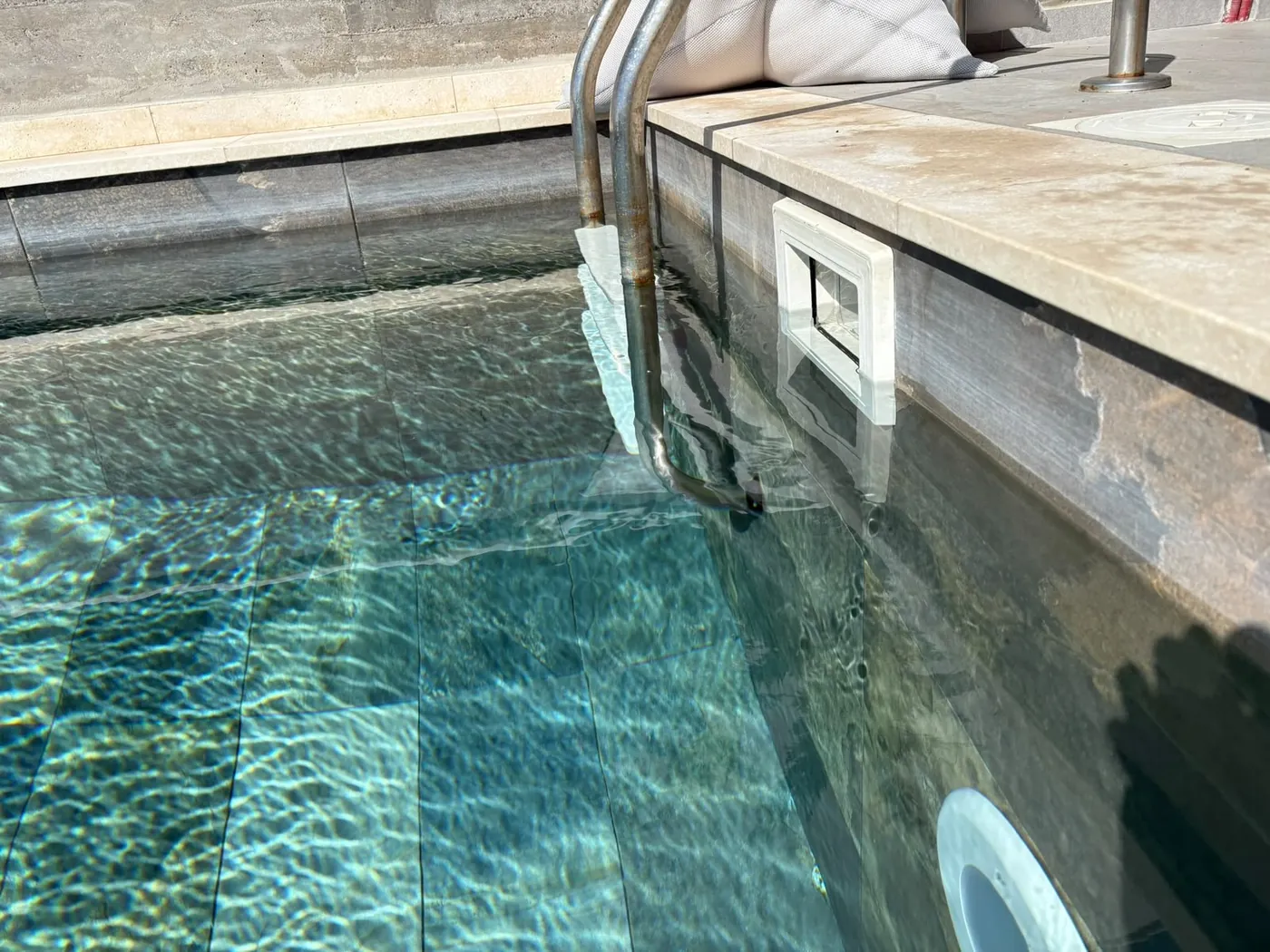
Following the intervention and approximately ten months of subsequent work, the pool’s water chemistry was recorded in the PoolHealth app on 13 October 2026.
| Parameter | July 2025 | Later analysis | October 2026 |
|---|---|---|---|
| Calcium hardness | 161 ppm | 163 ppm | 326 ppm |
| Total alkalinity | 192 ppm | 35 ppm | 98 ppm |
| Cyanuric acid | 73 ppm | 180 ppm | 24 ppm |
| pH | 7.64 | 7.30 | 7.73 |
| Free chlorine | — | 5.23 ppm | 2.24 ppm |
| Sulphate | Overrange | 560 ppm | Not shown |
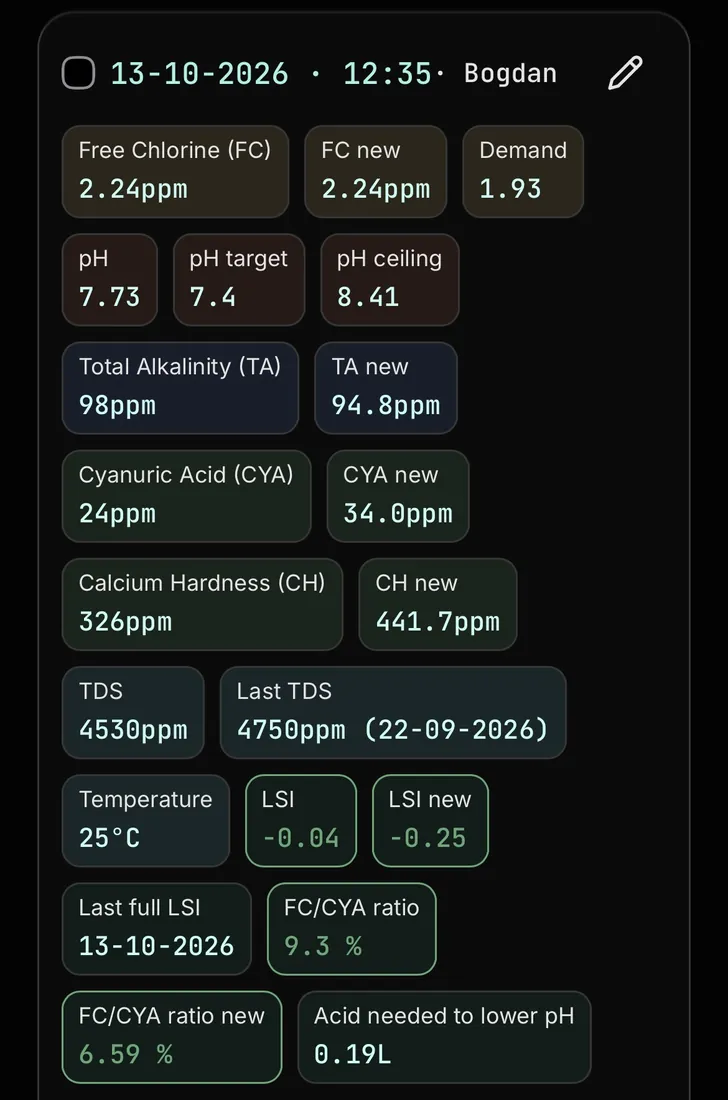
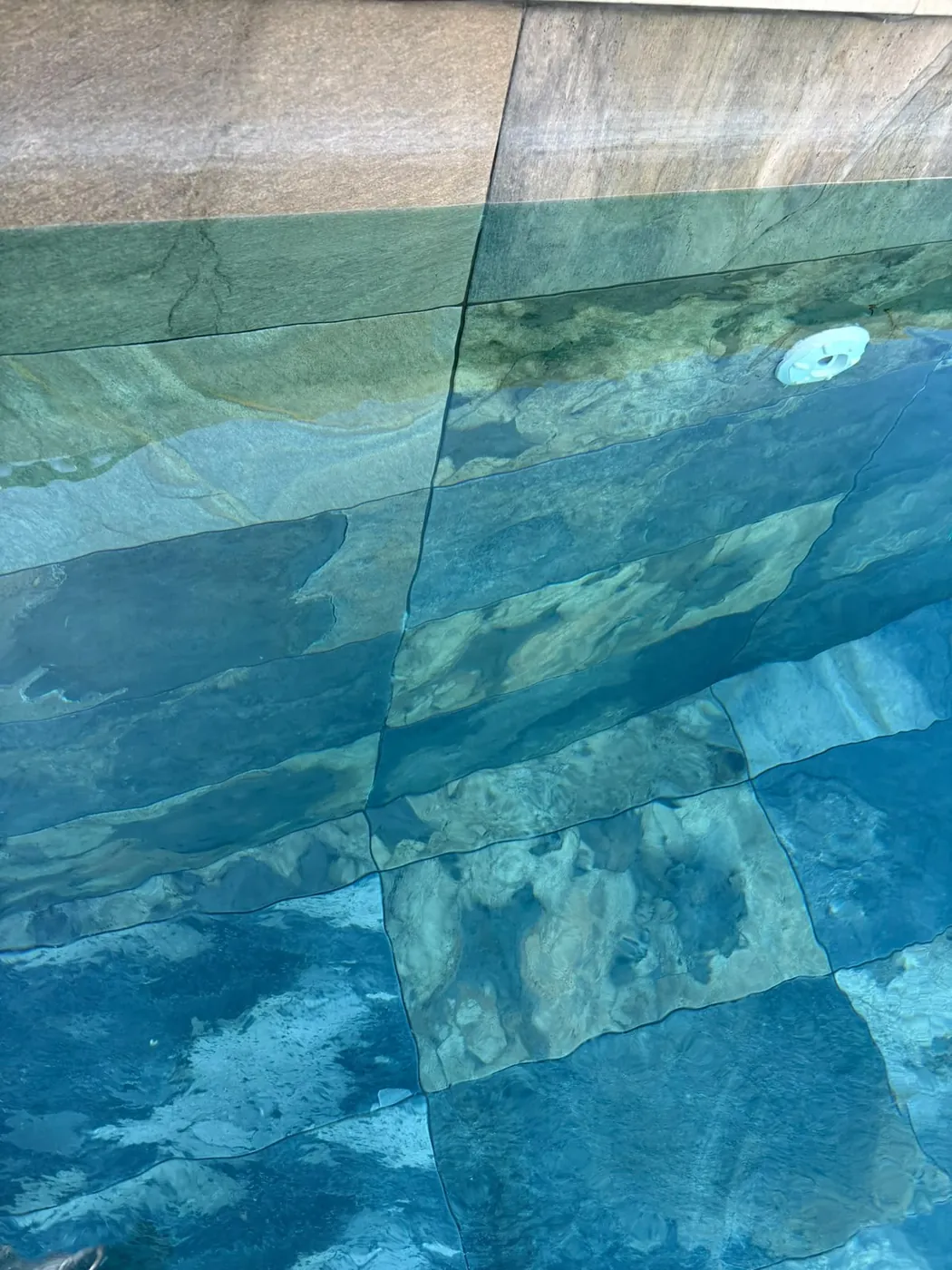
Cyanuric acid decreased from 180 ppm to 24 ppm. The excessive concentration was removed through complete water replacement. CYA was then introduced in a controlled manner to provide stabilisation appropriate for an outdoor pool. The final measurement reflects this new approach rather than continued accumulation from trichlor.
Total alkalinity increased from 35 ppm to 98 ppm. The water regained substantially greater buffering capacity.
Calcium hardness increased from 163 ppm to 326 ppm. This provided a different starting point for assessing calcium carbonate saturation and the water’s interaction with susceptible materials.
Free chlorine measured 2.24 ppm, with CYA at 24 ppm. These measurements must be interpreted together when assessing disinfection in an outdoor pool. The same record shows an FC/CYA ratio of 9.3%. The free chlorine reading alone is not proof of adequate disinfection under every operating condition.
The Langelier Saturation Index (LSI) was −0.04. This value is close to zero and indicates a near-neutral calcium carbonate saturation balance under the conditions and inputs used for the calculation.
Water chemistry management for seasonal change. The LSI was −0.04 in the latest record. After the balance is adjusted for the seasonal change, the expected LSI is −0.25. An LSI describes the water at one temperature on one date. Water temperature, calcium hardness, alkalinity and pH all enter the calculation, and in Cyprus the water temperature changes substantially between winter and summer, so a balanced result in October does not stay balanced all year. Ongoing management therefore includes LSI management and salt cell coordination.
The latest record does not include a new sulphate measurement, so the current concentration cannot be confirmed from the available data. However, the complete water replacement removed the sulphates present in the previous water, and the switch from sodium bisulphate to hydrochloric acid avoided introducing additional sulphates through routine pH correction.
Together, the measurements show that the pool had reached a substantially different chemical state and that its ongoing treatment strategy had changed.
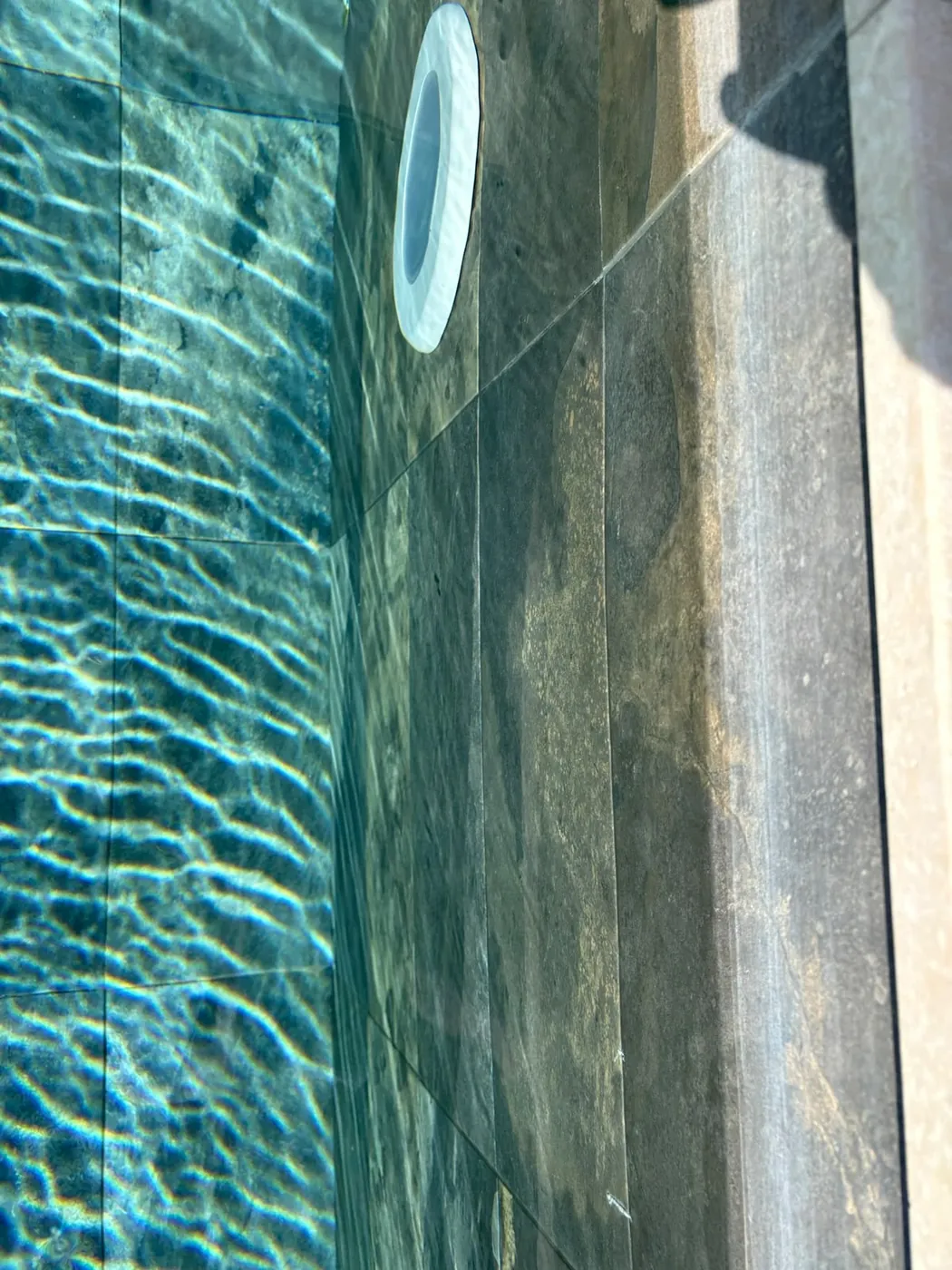
Existing grout damage and metal corrosion still require separate physical assessment. Correcting water chemistry can help reduce the risk of further deterioration, but it does not automatically repair damage that has already occurred. Corrosion of the ladder, in particular, cannot be removed by maintenance, which is why the ladder photo above is from August 2025, before the work began.
6. What this case demonstrates
- Water clarity is not proof of water balance. A pool may look clean while its chemistry is contributing to material deterioration.
- Free chlorine must be interpreted in context. Cyanuric acid concentration matters when assessing stabilised chlorine systems. A single chlorine reading does not tell the whole story.
- Treatment products have cumulative effects. Repeated use of trichlor can increase CYA, while sodium bisulphate adds sulphates. These effects should be considered when selecting a long-term treatment strategy. (See also chemical balance vs cosmetic fixes.)
- A change in treatment technology can address recurring sources of imbalance. Saltwater chlorination avoids the continuous CYA input associated with trichlor. Replacing sodium bisulphate with hydrochloric acid avoids further sulphate input from the pH correction product.
- Fresh water provides a new starting point, not a complete solution by itself. After refilling, the chemistry still needs to be measured, balanced and monitored. For outdoor pools, cyanuric acid must be managed deliberately rather than simply left at zero.
- Water balance and physical condition must be assessed together. Chemical measurements help identify risks, but existing surface deterioration and corrosion also require direct inspection.
- Water management helps avoid all of this — if it is in place from the start. When water management is right from the beginning, and the other factors are also in order, problems like these are far less likely to develop. Once grout has deteriorated or metal has corroded, maintenance cannot undo it.
- Trends matter more than isolated readings. Comparing measurements over time makes it possible to identify developing problems, understand the effects of treatment decisions and make better-informed adjustments.
Beyond water clarity
At PoolHealth, water analysis is not simply about checking whether individual parameters fall within a target range. It is about understanding how they interact, recognising potential risks and making informed decisions based on measured data.
In this case, the solution combined complete water replacement (draining, mechanical cleaning of the empty pool and refilling), filter treatment, chemical balancing and a change in treatment technology. The objective was not simply to correct the water once. It was to establish a new chemical baseline and a maintenance strategy designed to reduce the risk of recurring imbalance. The better outcome is to avoid reaching this point at all: managed properly from the beginning, a pool does not accumulate this kind of damage.
If your pool shows some of these signs, a full-scope inspection shows where it stands today, and our maintenance programme keeps it there.